
If you're facing crowding that's gotten worse since your last brace-free years, Dentist Open Now lines up a McKinney, TX provider who handles this exact procedure regularly — not as a side offering.
Call the number below and a scheduling coordinator finds you the next available specialist.
+1-866-227-2801 Call Now
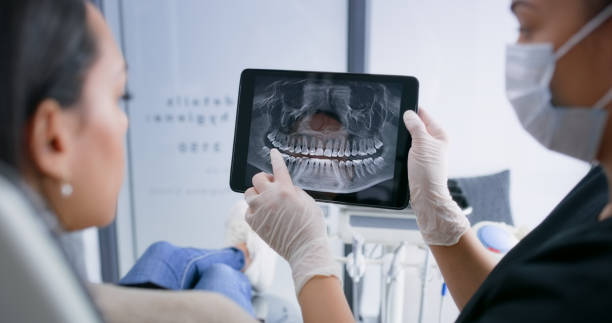
Clear aligners work by applying calibrated, incremental pressure through a series of custom trays, each one shifting your teeth slightly closer to their final position. A digital scan replaces the old goopy impression trays, mapping your bite in minutes and generating a full treatment simulation before you commit.
Mild-to-moderate crowding, gaps, and bite issues respond well to aligners; more complex bite corrections may still need traditional brackets and wires. Compliance matters here — aligners only work if they're worn roughly twenty-two hours a day, removed just for eating and brushing.
For teeth that need more than simple tipping, small bonded attachments act as anchor points the aligner can push against. Your provider maps out exactly which teeth need attachments during the digital treatment planning stage, before the first tray is ordered.
Your treatment plan starts from a 3D digital scan rather than a physical mold that can shift or distort.
A stage-by-stage simulation shows how your teeth are expected to move before any trays are ordered.
If teeth need extra adjustment partway through, refinement trays are built into most treatment plans.
Take them out to eat, brush, and for special occasions, then back in for the full wear schedule.
Whatever the specifics of your case, the specialist you reach through us has handled it before.
Your provider walks you through the simulated tooth movement stage by stage during the consult.
Aligners gradually shift crowded teeth into alignment over a series of custom trays.
Spacing between teeth is closed gradually through calibrated pressure across successive trays.
Certain overbite and underbite cases respond to aligner treatment when caught before they're severe.

Small tooth-colored attachments give aligners extra leverage on harder-to-move teeth.
Retainers are fitted immediately after your final tray to prevent teeth from drifting back.
A coordinator answers and asks a few quick questions about your specific case and how soon you need care.
We match you with a nearby specialist experienced in this exact procedure and check real-time openings.
You get a clear explanation of the treatment plan and its cost before any work begins.
Treatment proceeds on the agreed plan, with clear aftercare instructions and a follow-up if the case calls for one.
"Explained every step before doing anything. First time a dental visit didn't feel rushed."
"Got in faster than I expected for something this specific. Staff were sharp and direct."
"Price they quoted on the phone matched the invoice exactly. No surprise charges."
Most cases run between six and eighteen months depending on how much correction is needed.
Aligners typically cause milder, shorter-lived pressure discomfort compared to the tightening soreness of braces.
Around twenty-two hours daily is the standard recommendation, removing them only to eat and brush.
Existing dental work is usually accounted for during the digital scan and treatment planning.
Contact the office right away — a replacement or the next tray in the series can often be issued quickly.
Cost is often comparable to braces and varies by case complexity; a written estimate is given at consultation.
Our coverage spans McKinney and its surrounding area, matching you with the closest available specialist.
Every provider carries an active TX dental license, verified before referral.
A short phone call is all it takes to get this on the calendar this week.
Call +1-866-227-2801 Now